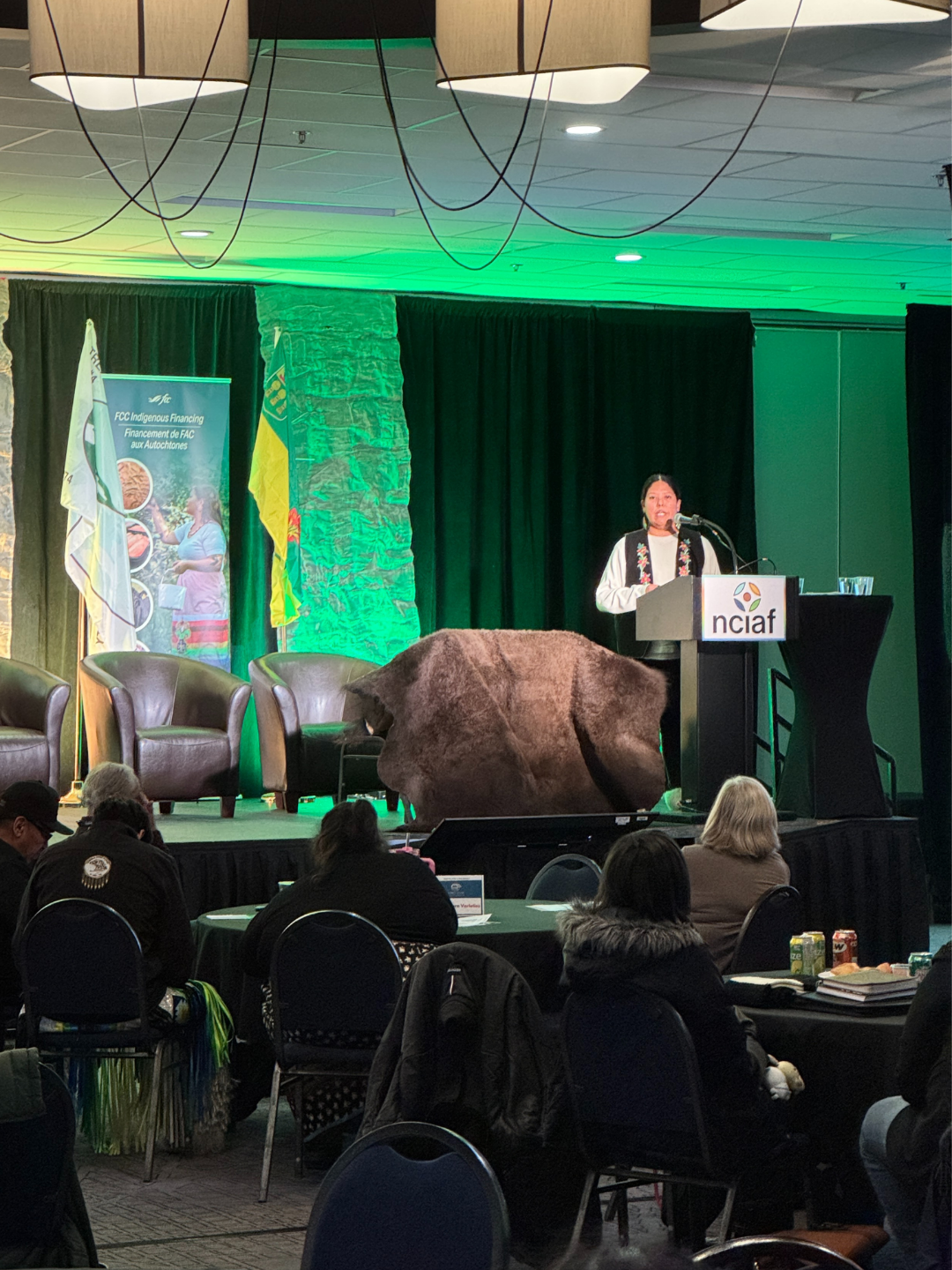
Join more than 500 Indigenous agriculture and food leaders, producers, entrepreneurs, communities, and partners for two days focused on strengthening Indigenous agriculture, food systems, food sovereignty and economic opportunity across Canada.
Canadian Western Agribition is proud to partner with the National Circle for Indigenous Agriculture and Food (NCIAF) for the second year to deliver the Indigenous Ag Summit, alongside presenting sponsor Farm Credit Canada and partners from across the country.
Two days. Practical knowledge. Meaningful connections. Real opportunities.
Whether you're growing an existing operation, developing a food business, exploring opportunities for your community, looking for funding, or simply wondering where to begin, the Indigenous Ag Summit is designed to help you move forward.
Sessions will explore the full agriculture and food value chain from land, livestock and primary production to food businesses, market access, funding, organizational capacity and community food security.
But the Summit is about more than listening to presentations.
It's about meeting the people who can help move an idea forward, learning from those who have done it, asking questions specific to your situation, and discovering resources and opportunities you may not know exist.
Come with an idea, a challenge or a question.
Leave with real knowledge, real connections and a clearer path forward.
Who Should Attend?
The Indigenous Ag Summit welcomes First Nations, Métis and Inuit:
Communities and leadership
Farmers, ranchers, harvesters and producers
Food entrepreneurs and processors
Economic development teams
Youth and emerging leaders
Indigenous organizations
Anyone interested in building a future in agriculture and food
The Summit also brings together industry, government, funders, educators and other partners who want to learn, build relationships and work alongside Indigenous Peoples to advance opportunities in agriculture and food.
Building What's Next
The NCIAF is an Indigenous-led national non-profit dedicated to advancing Indigenous participation across Canada's agriculture and food systems.
Together, CWA and NCIAF are creating a gathering where knowledge is shared, relationships are built, tough questions can be asked, and ideas can turn into action.
Because the goal isn't simply to have a great two days, it's what happens next that matters.
Click the button above or the link HERE to check out the breakout session for IAS 2026.
Questions or Want to Get Involved?
Contact Morgan Newby: mnewby@agribition.com.
Want a booth or table at IAS? Contact Joel Pickering: jpickering@agribition.com.
IAS 2025
Thank you for joining us at the 2025 Indigenous Ag Summit!
The NCIAF was proud to partner with Canadian Western Agribition to host the Indigenous Ag Summit (IAS), held November 27–28, 2025. The two-day gathering brought together Indigenous producers, entrepreneurs, youth, and allies to celebrate Indigenous leadership, innovation, and resilience in agriculture while strengthening connections across Indigenous food systems and economies.
Throughout the summit, participants engaged in meaningful dialogue and hands-on learning through a range of activities, including a Pipe Ceremony, engaging panel discussions, insightful youth presentations, dynamic breakout sessions, and valuable networking opportunities.
IAS 2025 created space for seasoned producers, emerging entrepreneurs, and community advocates alike to connect, learn, and grow together. The summit highlighted how Indigenous knowledge, experience, and innovation continue to shape the future of agriculture in Canada and beyond.
Summit Snapshot
The 2025 Indigenous Agriculture Summit featured an exceptional range of speakers whose insights grounded the event in Indigenous knowledge, practical agricultural skills, youth leadership, and forward-looking innovation. Their collective expertise provided depth and direction to the Summit’s core themes of buffalo management, food sovereignty, innovation, youth engagement, and agricultural development. The following section highlights key contributions from this year’s speakers.
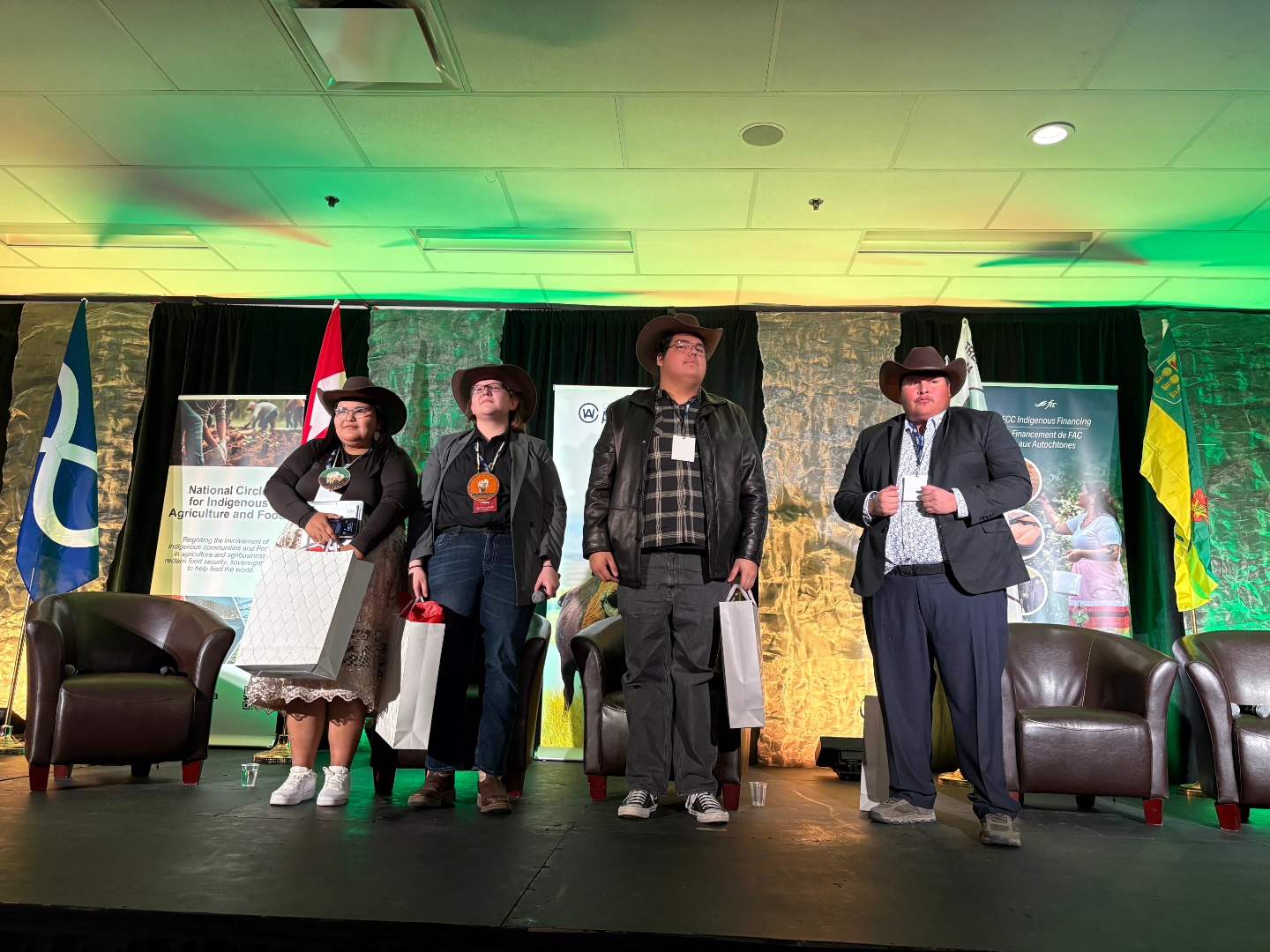
(Left to Right) Alexis Antoine, Meadow Leaming, Rylie Bell, and Bradley Bone.
Keynote: Sioux Valley Dakota Nation Youth Warriors Panel
The keynote speakers for the event were five youth representatives from Sioux Valley Dakota Nation. They shared powerful reflections on how agriculture is more than food production – it is a foundation for leadership, cultural identity, and community resilience. They described agriculture as an act of service and commitment to the future, rooted in political, spiritual, and cultural responsibility. For them, farming and land work are not simply for building gardens or raising food, but for reviving ancestral knowledge, honouring the land, and reinforcing their identity as Dakota people. Agriculture becomes a way to connect past, present, and future – teaching land stewardship, cultural values, and collective accountability across generations.
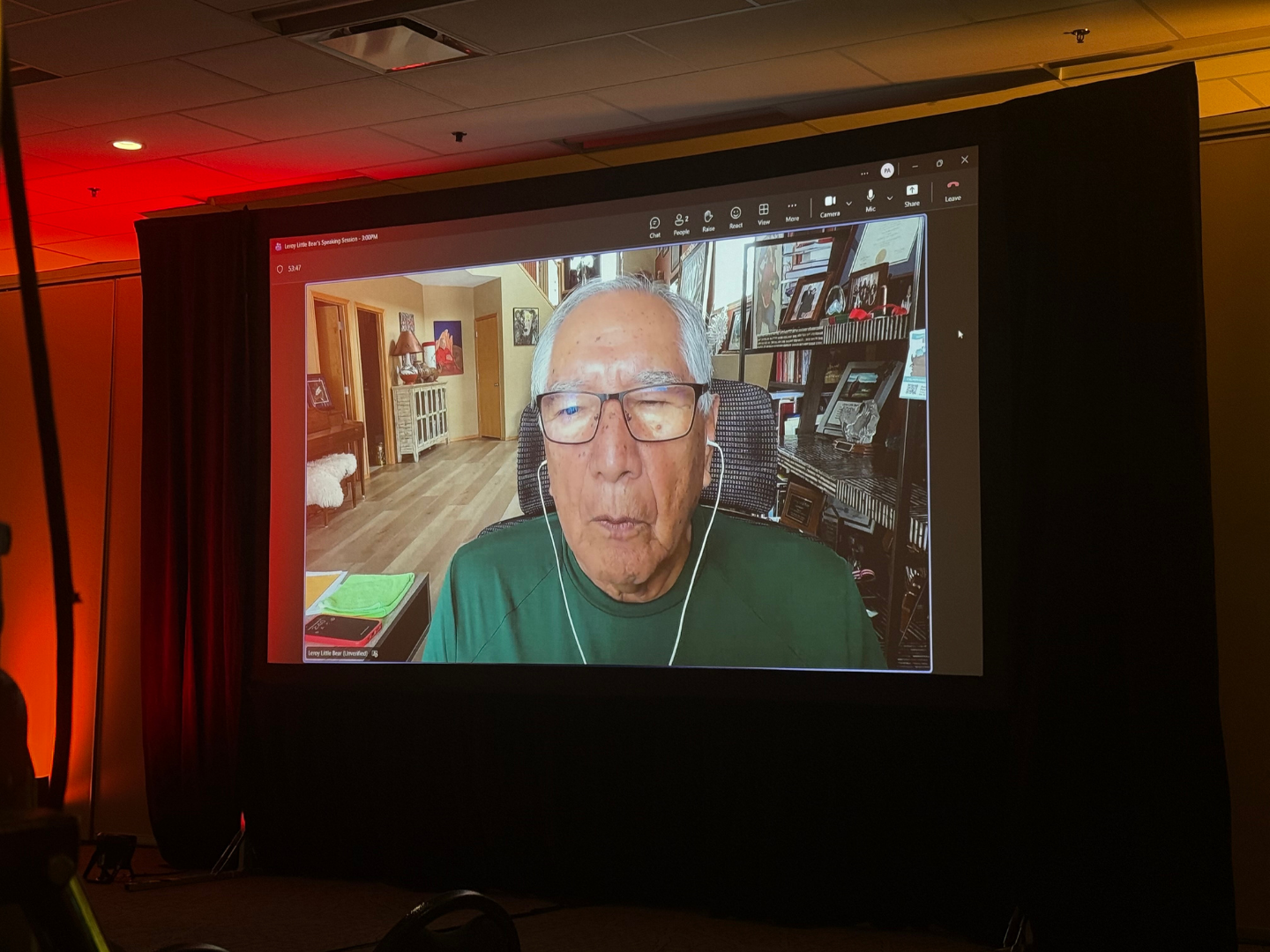
Photo of Dr. Leroy Little Bear on screen.
Dr. Leroy Little Bear(Blood Tribe) – Restoring Buffalo on the Land
Dr. Leroy Little Bear’s session explored the profound cultural, ecological, and linguistic significance of the buffalo, or Iinniiwa, to Indigenous Peoples, emphasizing their role as a keystone species and a foundation for traditional knowledge, language, and cultural practices. He explained how buffalo historically guided seasonal cycles, shaped the sound and structure of language, and carried ecological knowledge that informed human interactions with the land. The disappearance of buffalo contributed not only to ecological imbalance but also to the erosion of cultural systems and economic self-sufficiency, underscoring how deeply intertwined the species is with Indigenous life. Dr. Little Bear highlighted the Buffalo Treaty, a living Indigenous agreement that unites Nations in collaborative stewardship to restore buffalo to their traditional territories, creating shared opportunities for cultural revitalization, ecological restoration, and intergenerational learning.
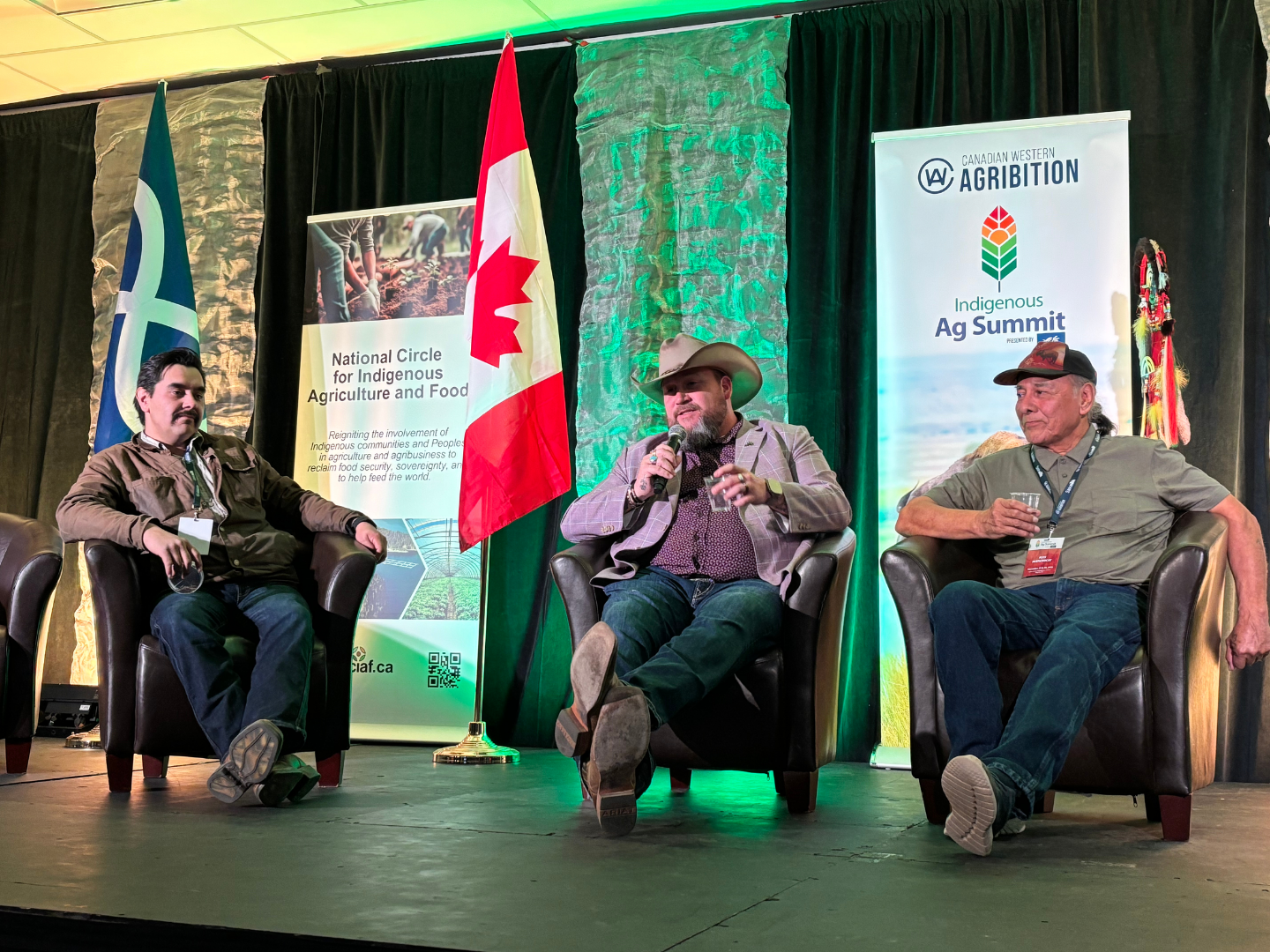
(Left to Right) Mikwan Mistickokat, Chris McKee, and Alex Mistickokat.
Alex & Mikwan Mistickokat (Waterhen First Nation) – Mistickokat Nehiyawak: The Foundation, Present and Future of Wild Rice Growing, Harvesting and Biotechnology
Day Two opened with a compelling session on the future of wild rice and the relationship between Indigenous knowledge, stewardship, and technology. Alex shared how harvesting remains deeply relational work rooted in observation, health, and community responsibility, and emphasized that Indigenous technologies have long guided sustainable practices. He highlighted that true economic sovereignty comes from working together and protecting the cultural significance of this premium food.
Mikwan demonstrated how modern tools, including AI and data systems through the Arctic Shield initiative, can help preserve elders’ knowledge, support ecological decision-making, and keep data ownership firmly with Indigenous nations.
The presenters also outlined key challenges: wild rice harvesting in northern Saskatchewan—despite producing most of Canada’s exports—is not recognized as agriculture, limiting access to funding and infrastructure. Harvesters earn around $2 per pound while processed rice sells for up to $22, with most value lost to external processors. Policy shifts and environmental change add further strain. The Arctic Shield project aims to rebuild connection, support sovereignty, and strengthen the cultural and economic future of wild rice.
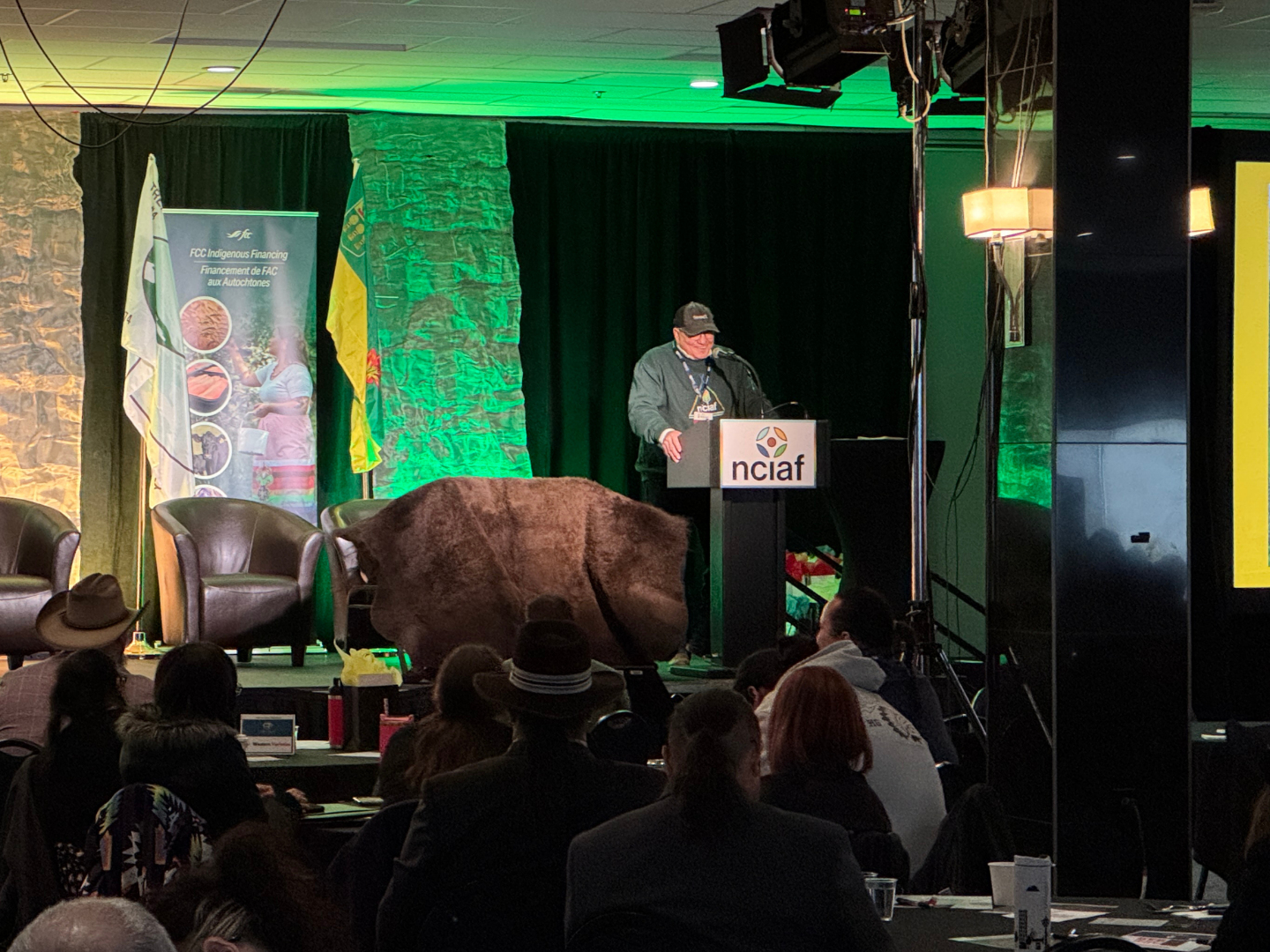
Terry Lerat speaking on stage.
Terry Lerat (Cowessess First Nation) – A Living Legacy, 4C Farms
This session highlighted the transformative work underway at 4C Farms. Presenter, Terry Lerat, explained that when Cowessess first entered farming, they were placed on land that was difficult and costly to cultivate—hilly, wet, and offering little return. This reflected a long-standing pattern in which First Nations were “offered land that no one wanted.” In recent years, Cowessess has been actively buying back their own prime agricultural land, rebuilding a land base capable of supporting real prosperity. Through a partnership with Saskatchewan Agriculture and Ducks Unlimited, they restored and improved their grasslands, increasing productivity so significantly that settler farmers now compete to lease land from them.
Terry’s message was grounded in a deep ethic of responsibility and care. “Look after your land and it will look after you,” he said, urging other First Nations to plan thoughtfully, involve all departments—including education—and take ownership of the opportunities that land provides.
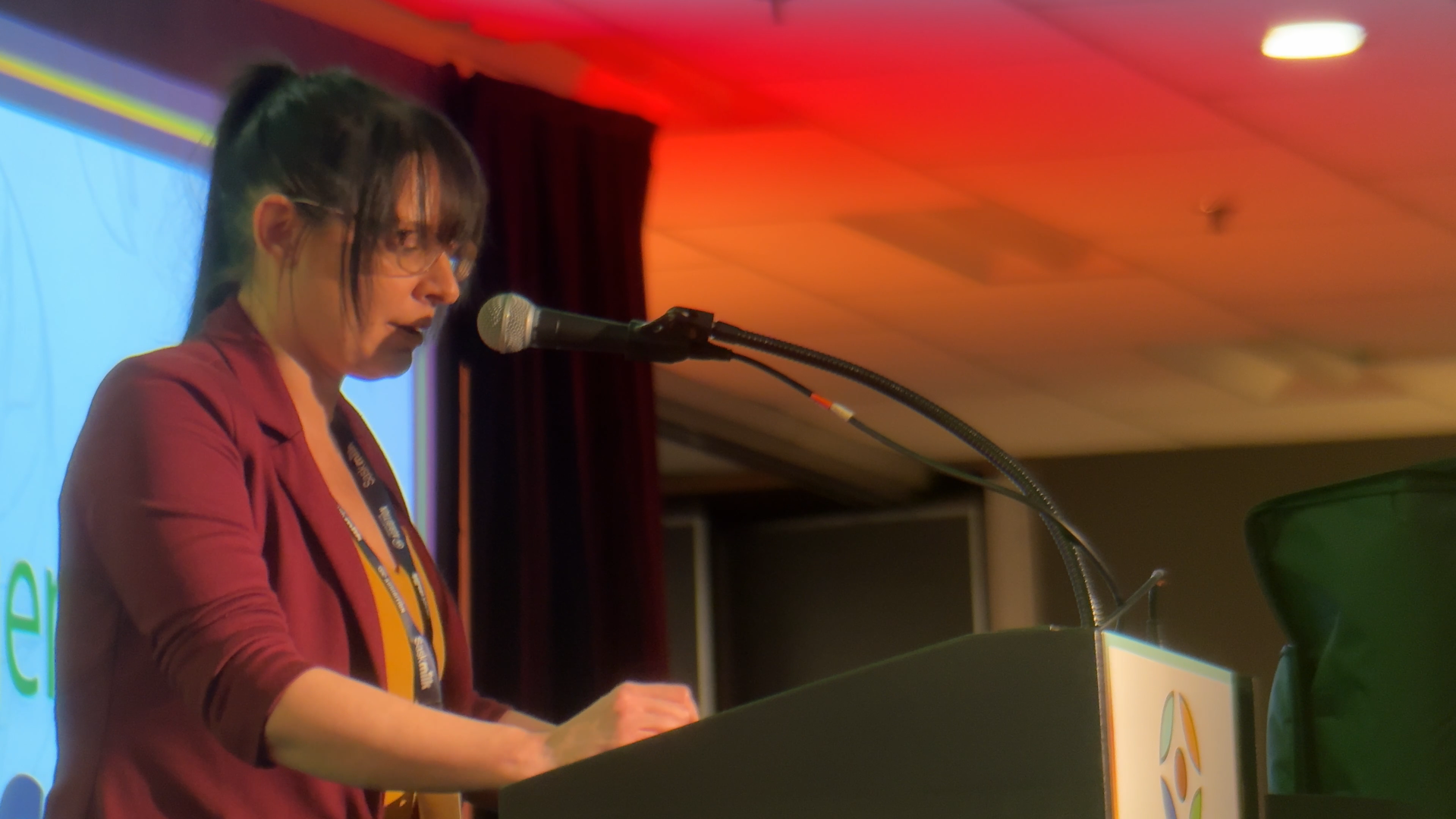
Chef Jenna White.
Chef Jenna White (Métis Nation Ontario) – From Allergies to Agency: Taking Indigenous Flavours from Kitchen to Shelf
Chef Jenna White explored how personal transformation, cultural grounding, and community relationships shaped her path from home cook to acclaimed Indigenous culinary entrepreneur. Jenna shared that her business was born in a period of profound upheaval – she developed a severe anaphylactic nut allergy and later became legally blind. Rather than stepping back from food, she stepped toward it, framing healing as a return to connection.
Jenna’s entire culinary practice is rooted in small-scale, land-connected sourcing. She buys her grains, eggs, meats, berries, maple syrup, and other ingredients directly from local producers, often in their rawest forms—she even mills her own flour. This keeps her tethered to the land and reinforces the truth she sees every day: small-scale food systems work. Large supply chains cannot replicate the impact, reciprocity, and immediacy of localized relationships. If she skips ordering meat from her butcher for a single week, they feel it. Her purchasing becomes part of a mutual ecosystem of care, reminding us that tiny economies can be powerful.
One of her creations – a cookie that is now New Brunswick’s official cookie – was served to attendees during her presentation. Jenna explained that food carries memory and identity; it holds where we come from and what we value. She closed with a message that resonated deeply across northern and remote realities, as well as among small-scale growers everywhere: “Collaboration over competition. When we focus on collaboration over competition, we plant something that will outlive us all.”
Chef Stephanie Baryluk.
Chef Stephanie Baryluk (Teetl’it Zheh Gwich’in Nation) – Cooking with Purpose: Revitalizing Indigenous knowledge One Dish at a Time
Inuk Chef Stephanie (Steph) Baryluk highlighted the deep connection between Indigenous food systems, culture, and community wellness. Chef Steph emphasized that her journey is rooted in rediscovering belonging and healing from the disconnection caused by colonization, especially for Inuit and Indigenous communities. She focuses on using the whole animal and honoring traditional practices learned from a young age, integrating them with her professional chef training to bring Indigenous foods to the table in culturally authentic ways.
Chef Steph also spoke about the importance of youth engagement and intergenerational learning in Indigenous food systems. Through programs like Rooted, developed with Simon Fraser University, she has been able to make reconciliation visible and edible while providing young people exposure to heritage foods and opportunities to participate in Indigenous food businesses. Her work demonstrates that Indigenous food sovereignty is not only about access to nutritious foods but also about community wellness, leadership development, and creating small businesses that support local jobs, education, and self-determination.